If you got to a welding shop, chances are they will have “welding goggles” for oxy-acetylene torch use, which are shade #5 for gas welding and cutting, much too dark for light duty fabrication like framebuilding.

OSHA recommends a shade 3 or 4 for brazing, and 2 for soldering, so considering that framebuilding is relatively light duty brazing, and hard soldering is higher heat than soft soldering, we’re really looking at a #3 lens as a compromise between visibility and protection.

A shade W3.0 is 8.5-18% luminous transmittance, with less than 0.1% EFUV transmittance and 9% IR transmittance. These numbers are important. Visible light luminous transmittance affects burning spots in your vision from overactivation of cones and rods. UV can damage tissue in the eyes, leading to damage and eye irritation but even polycarbonate safety or RX glasses will get you some ~99.9% UV protection. IR, on the other end of the spectrum, cooks your eyes, and harm is much less immediately noticeable than UV, and protection is much less standard than UV.

Green pass welder’s glass comes in numerous different, and a shade #3 green welders glass will protect your eyes from UV and IR. These are generally pretty affordable, $10-20, in various styles by various manufacturers. Many people use these and are used to them because they are the traditional option.

The problem is they mostly let green light through and block most like to either side of green, the same as older welding hoods. This is much better for your health than no eye protection, but can have a negative impact on the quality of torch work due to limited visibility.

That second peak is outside the visible light range (380-750nm). Ideally we would want a flat plateau for even colors in that range, and 0 transmittance on both sides, which is what many newer welding hoods attempt to achieve. The peak in the visible range is strongly centered on green, so naturally, it makes everything looks green, and it blocks out other colors so it is more difficult to see the steel start to glow.

We can get improved color performance with a “true color” type welding hood or auto-darking goggles which rely on special reflective coatings on the filter to get some permanent ~W13 UV and IR protection. Obviously, this is vastly superior in terms of protection and color recognition. The shade may be on the slightly darker end, as the grind mode (light mode without auto-darkening) is in the range of shade 3-4, but it appears brighter because of the more even light distribution, unless you have green ambient lights. There is something to be said about the poor form factor, but if you weld and just do braze-ons, your fancy auto-darkening hood can be used to protect your eyes for brazing operations.

However, if you’re brazing joints, it can be difficult to see past the bright orange flame, which is a sodium flare caused by heading the flux. Lampworkers (glassworkers who use torches, aka lamps) have traditionally used didymium glasses to filter out the orange flare at 589nm, and this is another reason green lenses are so bad. They cut out more red light (black body radiation from the steel) than they cut out orange sodium flare light. These have also been used by framebuilders for decades.
The problem with didymium glasses is they don’t actually protect your eyes. Traditional glasses are glass, and glass is not impact resistant like normal safety polycarbonate glasses. Modern didymium glass substitutes often have UV protection, but lack IR protection. They are incredibly useful for their performance and being able to see past the flame, but not so useful as PPE.
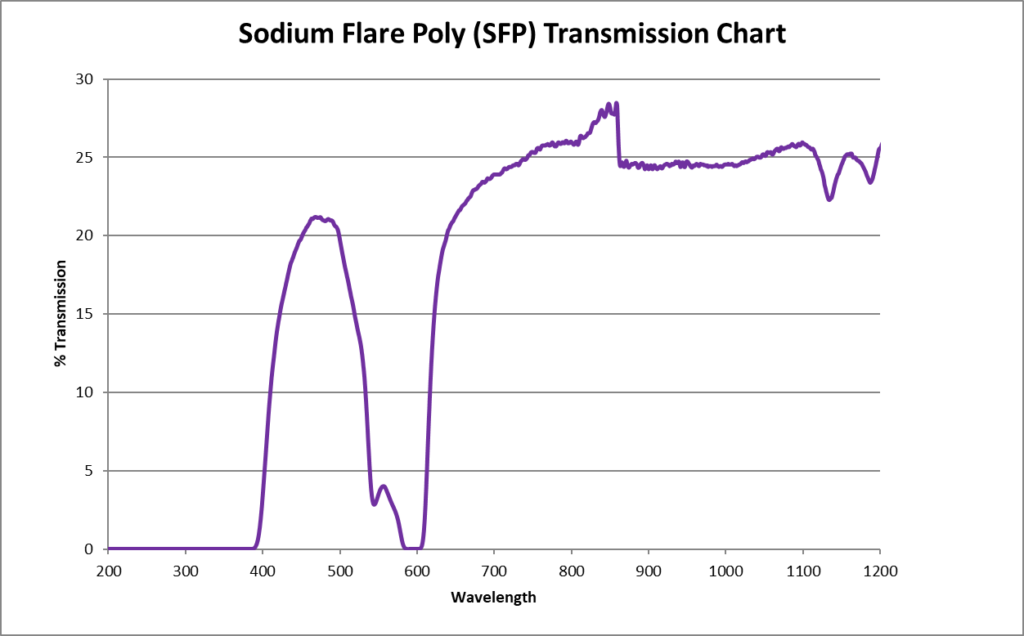
The good news is there are a number of products that combine shade W3 protection with sodium flare blockers, the bad news is they are all incredibly expensive.
Phillips Safety BoroTruView 3.0
https://phillips-safety.com/product-category/glassworking/lampworking-glasses/borotruview-3-0/
They come in various styles, but the cheapest are flip-up clip-ons at $140. Clip-ons allow for increased light leakage but can also be convenient.


Walewear
https://www.waleapparatus.com/category/wale-wear
Walewear clips-ons start at $84 and they have 2 variants with IR protection, “SB” and “B3”. “SB” has additional IR filters over plain sodium flare blockers, and “B3” has an additional #3 shade, but according to the numbers, are much darker than a #3 shade. Clip-ons allow for increased light leakage but can also be convenient.


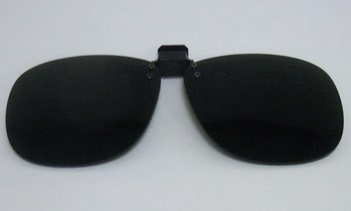

Their charts use OD. To convert LT = 10^(-OD) meaning OD0.5 = 32%, OD1 = 10%, OD1.5 = 3%, OD2 = 1%. note that B3 LT is claimed to only be 2% which would be close to a shade 5, but without shade 5 IR protection. SB LT is claimed to be 15% which is about a shade 3, but likely lacking shade 3 IR protection. Both are much improved over didymium or no IR protection at all though.
Vetrosafe
Glasses start at $85, but only in a couple of styles, one for OTG, and one with reduced light leaking, and options for split shade lenses (not useful for framebuilding). They also claim some stuff like blue light blockage to reduce eye strain, which seems pointless to me.


Luminous transmittance is high, so relatively bright for W3.0. They claim to pass all the requirements for true W3.0 with noticeably lower LT in IR than the alternatives. Vetrosafe looks good on paper.
Vetrosafe is a relatively new company (2022?). The founder was a cofounder of EnChroma, which caused controversy due to their questionable and unethical viral marketing for their color corrective lenses which were designed to help color distinction for people with colorblindness. However, everything I read on EnChroma is that they do actually filter out certain wavelengths as designed, and work as designed, but were intentionally overmarketed on their ability to allow color blind people to see colors. It seems to me likely that the science and engineering is there in terms of filtering wavelengths, just that these products were not the miracle cure they were advertised to be, but also not just snake oil. With sodium flare glasses, we’re just looking to replicate didymium sodium flare blocking with additional UV and IR protection with a neutral tint.
I have used green shade #3 which I hate enough that I kept taking them off, meaning I wasn’t getting eye protection, some “true color” welding goggles of questionable quality that I liked much more. I have some Vetrosafes on order, and even though they are just about the cheapest option here with free shipping, are quite pricey at $85. As they say, buy once, cry once, buy thrice, learn a bunch of things.
Update, the Vetrosafes are great. They hide the sodium flare and let you see what is going on more easily. It is easy to see when the steel starts to glow. The one problem is it is hard to see when the steel starts to glow orange because of the wavelength blockers. There are a couple situations I might don the true color goggles again.
 Kuromori